Built for the dark
Silent wings, lopsided ears, tube-shaped eyes and a neck with twice as many bones as yours.
Silent flight
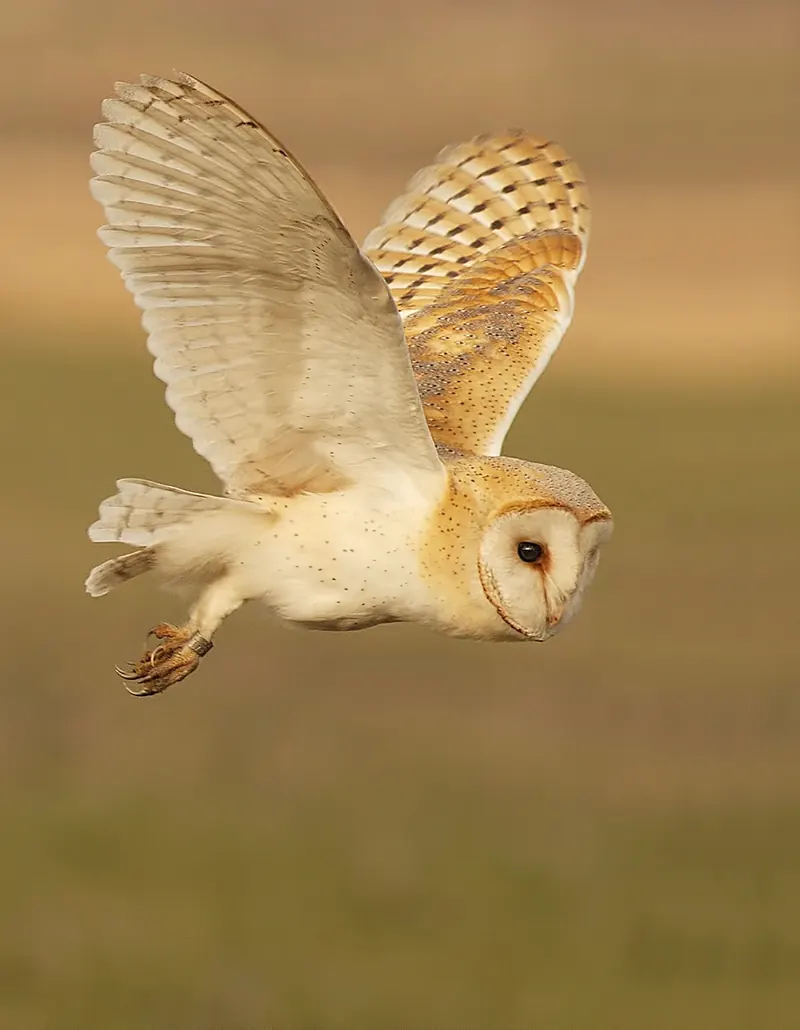
The leading wing feather has a row of tiny hooks that deaden the sound of air hitting the wing, and the feather surfaces are soft and hair-covered. source Owls’ velvety, serrated flight feathers cut wing noise above about 2 kHz, below the hearing range of their usual prey. Wikipedia
Barn owls have very low wing loading (big wings, light body), so they can fly very slowly without stalling. source Barn owls hunt by flying low (up to about 3 metres) and slowly back and forth, relying mostly on sound, often hovering before the pounce. source
Some fish-eating owls lack the silent-flight serrations, because fish can’t hear them coming anyway. source
The price of silent flight: barn owl feathers are not very waterproof, so they avoid hunting in rain. Wet feathers are noisier and less efficient. source
Hearing
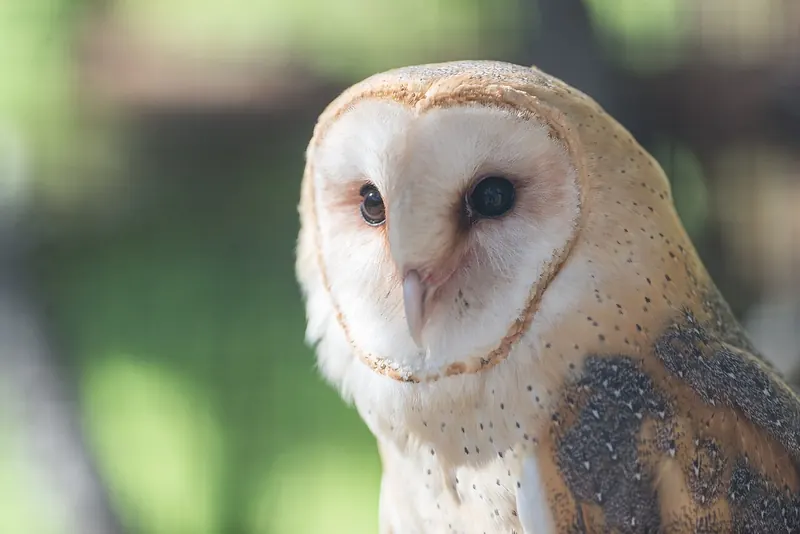
The barn owl’s heart-shaped facial disc collects sound and directs it toward the ears. source A barn owl’s ear openings sit at different heights, one higher than the other, so the brain can work out exactly where a sound comes from. source
Owls locate sound by the tiny difference in arrival time between the two ears, about 30 microseconds, turning the head until the sound reaches both ears at once. Wikipedia Experiments have shown barn owls can catch prey in total darkness by hearing alone. source
The Barn Owl Trust says barn owl hearing is one of the most sensitive of any animal ever tested. source
Despite their super-hearing, barn owls sometimes choose to roost and nest in very noisy places. source
Eyes
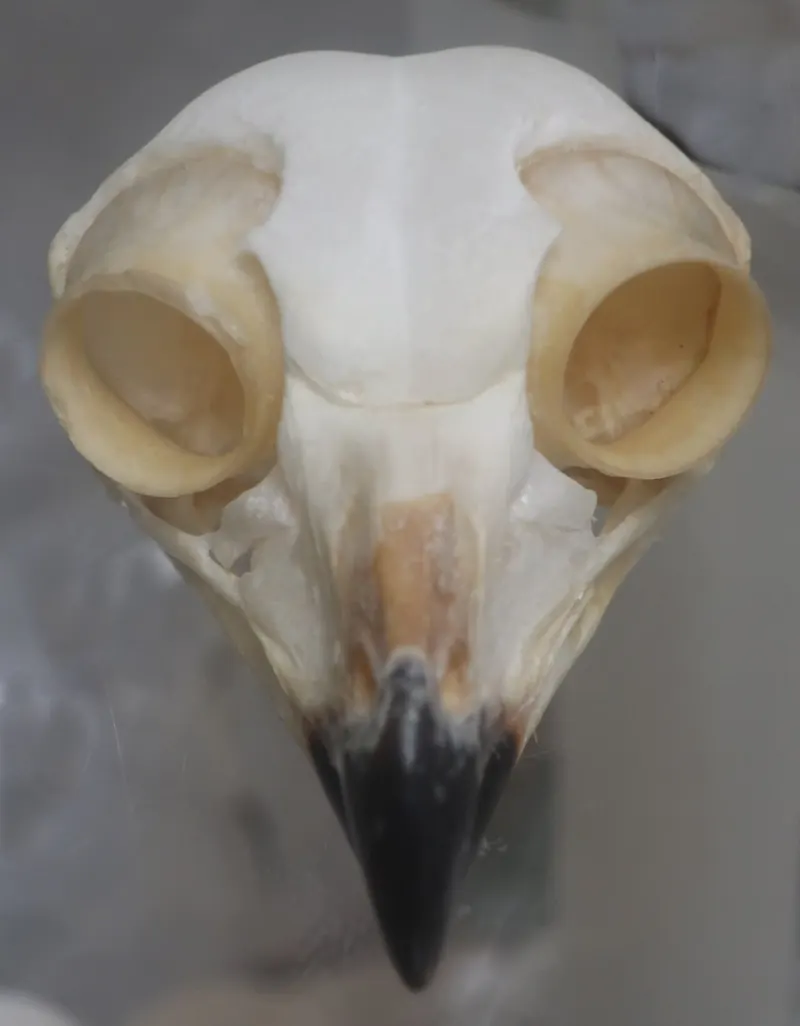
Owl eyes are so big for the skull that they have become tube-shaped and are fixed in their sockets, so an owl turns its head instead of its eyes. source Owls have the most forward-facing eyes of any bird group, which gives them some of the widest binocular vision. source
Barn owl eyes are, on average, twice as light-sensitive as human eyes, and very movement-sensitive. Anything that keeps still and silent is usually ignored. source
Owls are farsighted: they cannot focus on things within a few centimetres of their eyes. Bristly “filoplume” feathers around the beak and feet help them feel prey up close. source
Barn owls build a detailed “mental map” of their home range, and mostly avoid flying into things in the dark by remembering clear flight paths. source Barn owls take little notice of artificial lights. source
The neck
Owls can turn their heads as much as 270°. They cannot turn them all the way round. source Owls have 14 neck vertebrae; humans have seven. source Special blood-vessel plumbing keeps blood reaching the brain while the head turns. The holes the arteries pass through are about ten times wider than the arteries themselves. source
Feet, legs and the rest
Barn owls have remarkably long legs, toes and talons for reaching prey at the base of deep grass. Prey is thought to be killed by the clench of the feet rather than a peck. source Grip strength varies hugely: a burrowing owl needs only 5 N to release its prey, a barn owl 30 N, and a great horned owl over 130 N. Wikipedia
The Barn Owl Trust thinks the white underside is most plausibly an anti-silhouette trick, because from below a pale bird is harder to see against the sky. source
Unlike day-flying birds of prey, owls have no crop; food goes straight to the stomach. source Owls rarely drink. They get almost all their water from their food. source Owls have very little sense of smell, so parents will not reject a youngster just because a human has handled it. source
In owls, females are typically larger than males. source Female barn owls are around 360 g, males around 330 g; before egg-laying, a female may reach 425 g. source