The owl pellet, explained (and dissected)
What a pellet is, how it’s made, and a step-by-step guide to finding out what an owl had for dinner.
What is a pellet?
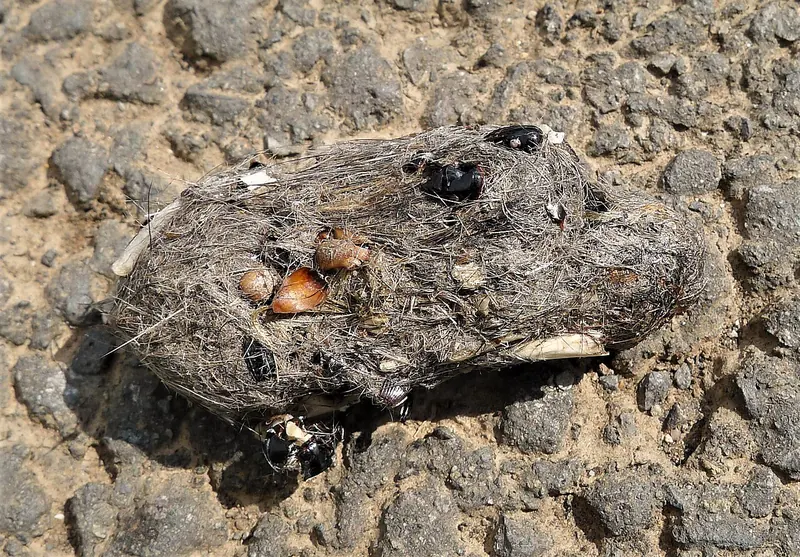
Barn owls swallow prey whole but can’t digest fur and bone, so they cough the leftovers up through the beak as a pellet. source Making a pellet takes 6 hours or more, and an owl brings up 1 or 2 after each night’s hunting. source
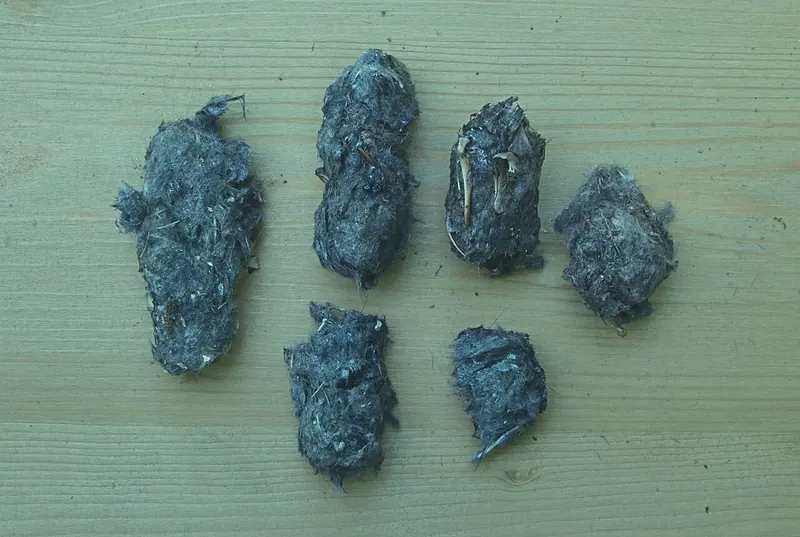
Barn owl pellets are about the size of a man’s thumb, black when fresh and grey with age, and often hold the remains of 4 or 5 small mammals. source
Barn owls don’t build a nest. They lay on a layer of old pellets. source In old roosts, clothes moths eat the fur and leave the tiny bones, which can last for many years. source
Little owl pellets are different from other owl pellets, but similar to kestrel pellets. source
How to dissect an owl pellet
Get a pellet the legal, kind way
In 2008 Defra’s lawyers advised the Barn Owl Trust that owl pellets are not “derived from” birds, so they may be collected, kept or traded without a licence. source Pellets pile up at roosts and nest sites. Collect quietly: barn owls are legally protected from disturbance when nesting. source The Barn Owl Trust sells individual pellet dissection packs. Wild pellets from the Trust are strictly limited to schools and educational groups. source Kits are also sold online; see kit & books.
Store it safely
Dry fresh pellets thoroughly and keep them airtight, or freeze them in an unsealed bag or box. Freezing kills the harmless clothes-moth grubs that like the fur. source
Dry or soak
Dry pellets are easiest, but soaking for 24 hours helps get small bones out intact. Tease them apart with fingers or tweezers. source
Lay it all out
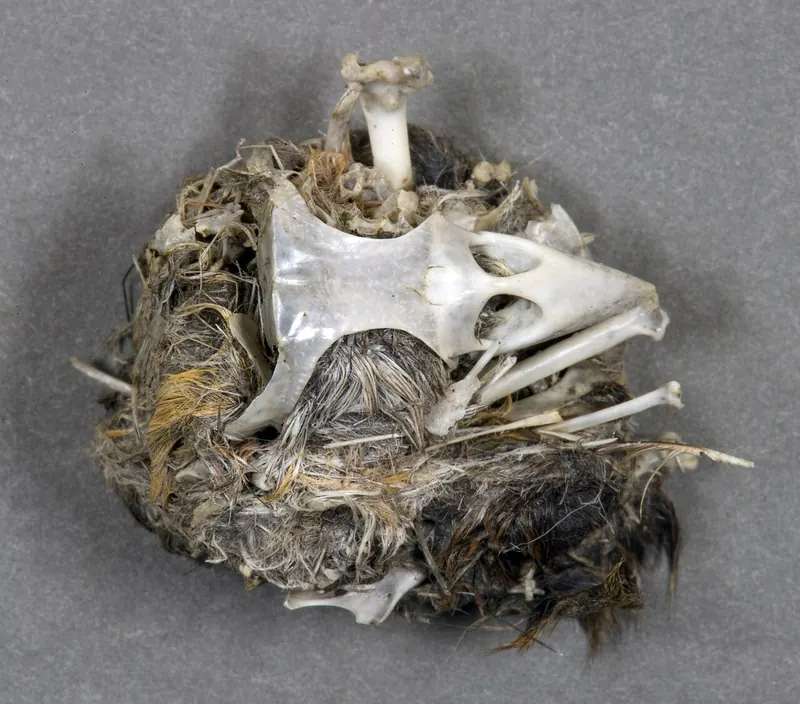
Work on a tray lined with paper, with tweezers, a cocktail stick and a magnifier. Group bones as you go: skulls and jaws, hips, long leg bones, ribs and vertebrae, and fur.
Find the jaws first
The simplest way to identify prey is to find the lower jawbones and pair up the left and right jaws; that also tells you how many animals were eaten. source
Shrew, vole or mouse?
Shrew jaws are easy to spot: common shrews have red-tipped teeth. source The rusty tips on shrew teeth come from iron deposits that harden the enamel. Wikipedia Vole molars are high-crowned with angular cusps; mice have low-crowned molars with rounded cusps. Wikipedia
Count and chart
In Britain, barn owls eat mainly small mammals: field voles make up about 45% of the diet, common shrews 20% and wood mice 15%. Barn Owl Trust Compare your tally with that. House mice, brown rats, bank voles and pygmy shrews are also taken; amphibians, birds and bats are rare in UK barn owl diets. source
Wash up
Pellets don’t smell and are not droppings, but always wash your hands with soap and water afterwards. source
Dead owls, eggs and feathers are different. The law bans possessing wild-bird parts unless you can show they were obtained lawfully, and selling them is illegal unless you are a registered person. source
Want to practise first? Try Pellet Lab, where you can tease apart a virtual pellet with prey drawn from the real British barn owl diet.
Affiliate links: As an Amazon Associate I earn from qualifying purchases. Pellet dissection kits: search Amazon UK for owl pellet kits. Wild-collected pellets from the Barn Owl Trust go only to schools and educational groups.