The UK’s owls, and a few from further afield
Five breeding species, two famous visitors, and 19 of the world’s most remarkable owls.
How many owl species are there? It depends who is counting. Wikipedia’s owl article says “over 200” in one place and “some 220 to 225” in another. source There are two living owl families: the typical owls (Strigidae) and the barn owls and bay owls (Tytonidae). source Britain has five regular breeders. Tawny owls are found in England, Scotland and Wales, but not in Ireland. source Little owls were introduced to England in the 1800s, and they are absent from Ireland. source
UK breeding owls
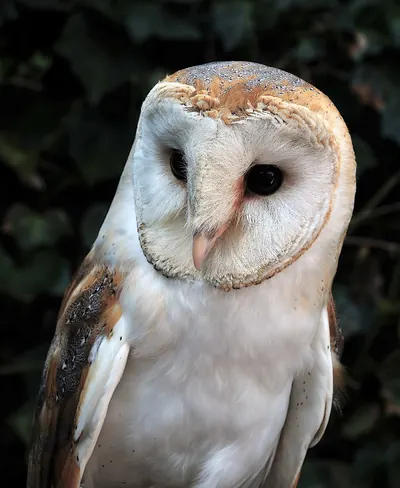 Barn owlTyto albaOpen farmland across the UK and Ireland
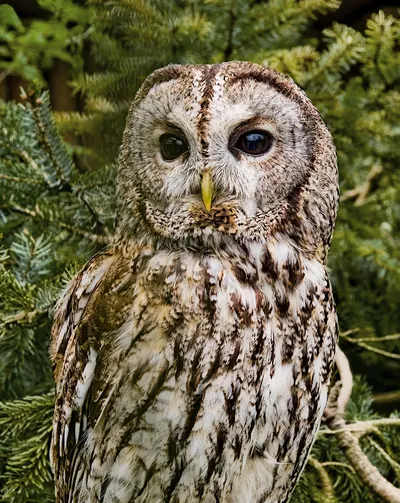 Tawny owlStrix alucoWoods, parks and gardens with mature trees in Great Britain (not Ireland)
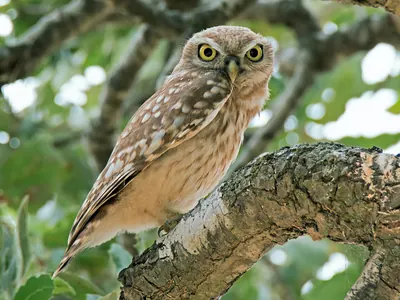 Little owlAthene noctuaFarmland, old orchards and parkland, mainly in England and Wales
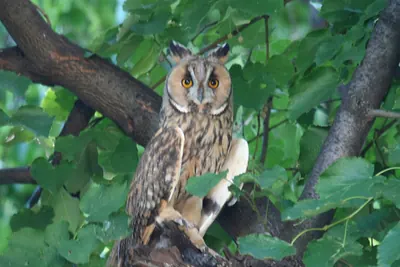 Long-eared owlAsio otusConifer copses and scrub; communal roosts in winter
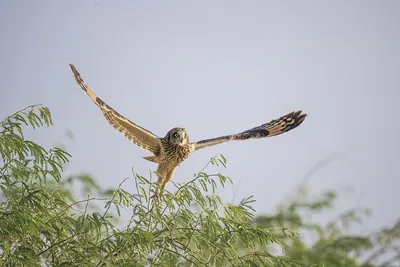 Short-eared owlAsio flammeusMoorland, marsh, rough grassland and coasts
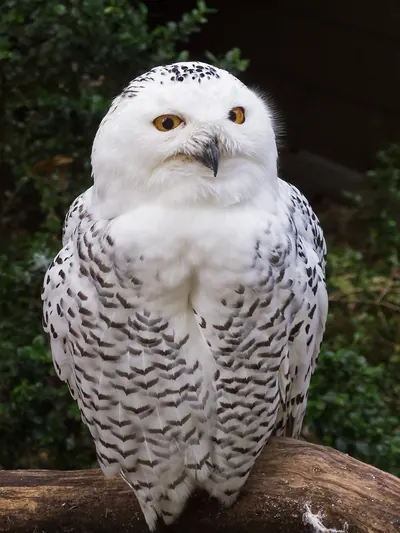
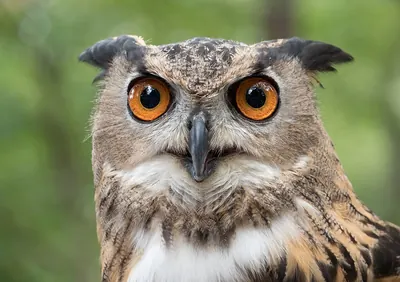
Visitors and newcomers
Quick ID
| Barn owl | Barn owl: about 330 mm tall, 900 mm wingspan, white underneath, golden-buff above, white heart-shaped face, dark eyes. Lives in open farmland, not woodland. |
|---|---|
| Tawny owl | Tawny owl: about 430 mm tall, 950 mm wingspan, brown or grey, dark eyes. The most common owl in the UK, found wherever there are mature trees, cities included. |
| Little owl | Little owl: about 220 mm tall, 560 mm wingspan, pale yellow eyes. Likes mixed farmland and old orchards; largely active by day. |
| Long-eared owl | Long-eared owl: about 350 mm tall, 950 mm wingspan, orange eyes, long ear-tufts when raised. Extremely nocturnal; gathers at communal roosts in winter. |
| Short-eared owl | Short-eared owl: about 350 mm tall, 1,000 mm wingspan, yellow eyes, short and often invisible ear tufts. Hunts in daylight over moorland, marsh and farmland. |
ID figures from the Barn Owl Trust’s UK owl species page. Practise with Whose Face?