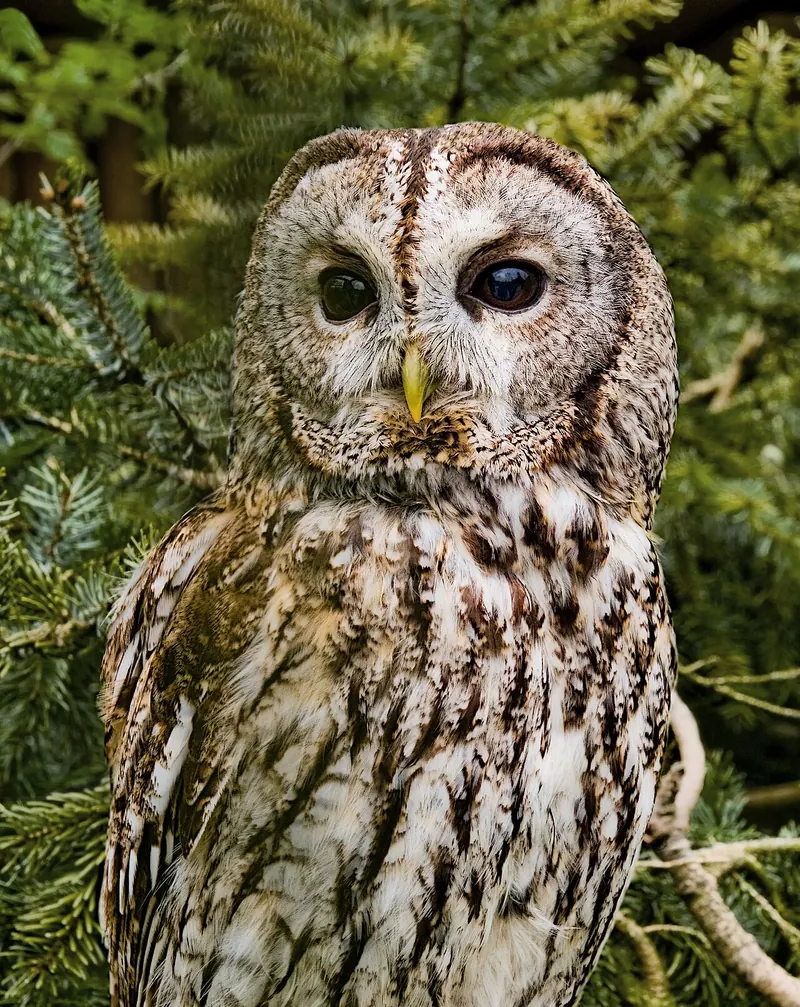
Tawny owl
Strix aluco · Woods, parks and gardens with mature trees in Great Britain (not Ireland)
~43 cm tall · 95 cm wings
- Tawny owl: about 430 mm tall, 950 mm wingspan, brown or grey, dark eyes. The most common owl in the UK, found wherever there are mature trees, cities included. source
- The famous “twit twoo” is a tawny owl. Usually the female calls “kewick” and the male “hoohoo”, but calls vary. source
- The classic “tu-whit tu-who” is really a duet: the female’s kew-wick and the male’s answering hooo. source
- Tawny owls eat mainly wood mice and bank voles, plus rabbits, moles, small birds, beetles, earthworms, frogs and even fish. source
- A tawny owl territory is 12–20 hectares, and tawnies rarely leave it once settled. source
- Tawny owls nest early (average first egg 23 March in the UK) and lay 2–3 eggs, incubated for about 30 days. source
- BTO: about 50,000 pairs of tawny owls (2005). Its detailed trend is −39% (1967–2024), though its summary box calls the trend “stable”, because tawnies are hard to monitor. source
- Tawny owl: Amber-listed. It is the UK’s most common owl, but RSPB says numbers fell by more than 40% between 1995 and 2023. source
- If you regularly hear an owl hooting, it is likely to be a tawny owl. source
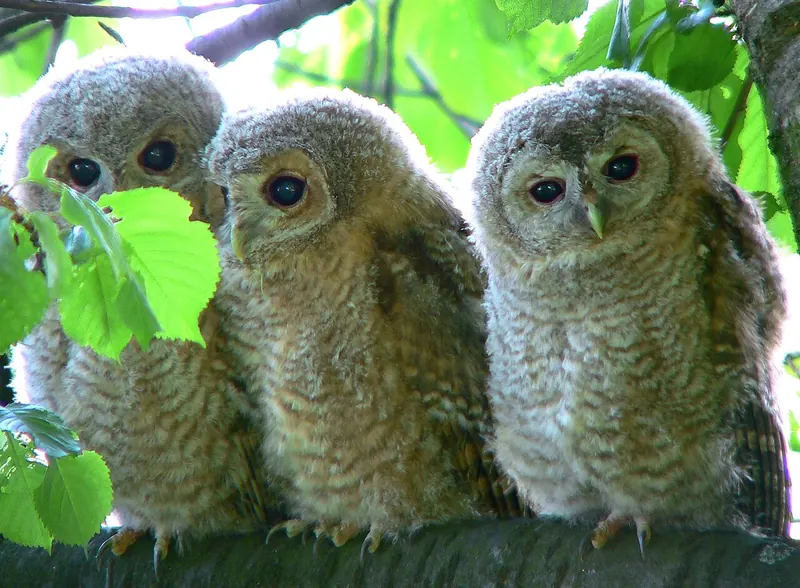
- Young tawny owls leave the nest before they can fly. This is called “branching”; their parents keep feeding them wherever they are, even on the ground. source
- Owlet ID trick: young tawny owls have vivid pink eyelids; young barn owls have dark eyes and dark eyelids. source
- BTO: tawny owls reaching breeding age typically live 4 years; the oldest ringed bird reached 23 years 5 months. source
- Tawny owls are found in England, Scotland and Wales, but not in Ireland. source
- The tawny owl is absent from Ireland, probably because of competition from the long-eared owl. source
- The tawny owl is not on Schedule 1, so it has no special legal protection from disturbance while nesting (though, like all wild birds, its active nest is protected). source
- Nobody is sure why tawny owls have declined. Woodland management, urbanisation and climate effects on prey are among the suspects. source
- Tawny owl boxes go in mature trees at least 3 m up (3.7 m or more where people pass), with the entrance away from the prevailing wind. source
Scientific name checked against Wikipedia.